General News
12 June, 2025
Big smiles and bushy tails
Project Platypus launched its latest conservation initiative, 'The Tail of the Squirrel Glider' over the weekend, drawing a sold-out crowd of over 60 people to Pomonal Estate for a day of education, wildlife encounters, and planning.
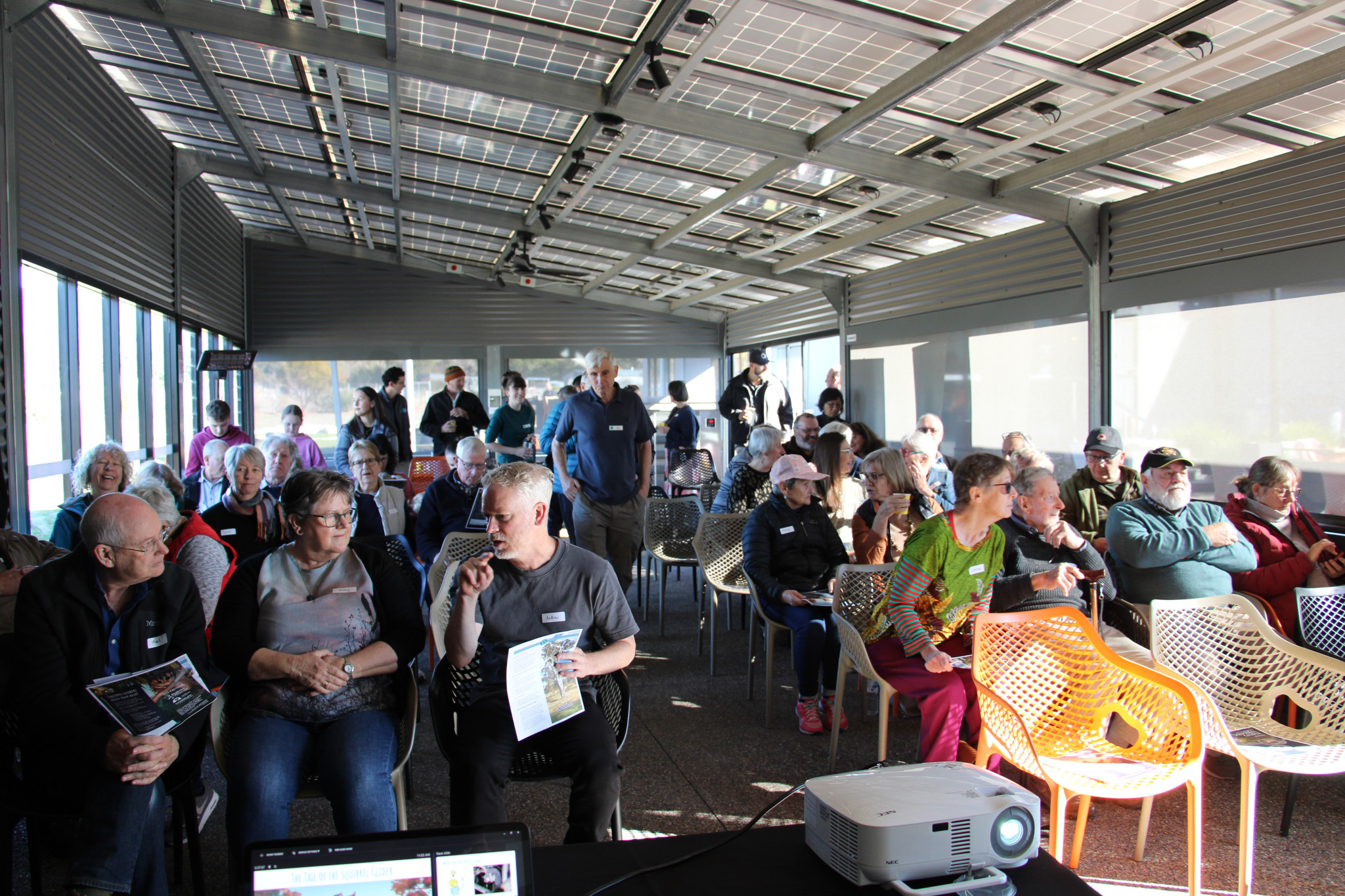
Locals travelled from across the region to learn about the threatened squirrel glider, a species rarely seen in the Grampians, and to meet the furry gliders themselves thanks to Black Snake Productions, which brought along a collection of native wildlife for up-close encounters.
The event featured inspiring talks from Project Platypus staff including Elia Pertile, project officer Phoebe Nowell-Usticke, and Chris Pocknee of the Biolinks Alliance, who all shed light on the species’ decline and what can be done to help. “We didn't even know if we still had them,” Elia said, referring to elusive squirrel gliders hidden within the region.
She explained that gliders are particularly vulnerable due to their reliance on native vegetation, “It’s no surprise that this has left many of our native species under extreme pressure of habitat loss and fragmentation. Corellas, stumpy tails, there are species that have been able to adapt quite well to agriculture.
The squirrel gliders are not one of them, because all the things they need, trees to stay off the ground from predators, to forage for insects, the flowering species they prefer, none of that exists in here. Think about these species as living on islands,” she said.
Since launching the project, the team has already surveyed over 32 kilometres of roadsides and conducted spotlighting to determine where squirrel gliders still exist in the landscape.
“Big step one of the project is getting out there, surveying, finding out where these gliders are still living, and where there's good quality habitat that they might be able to take advantage of,” said Elia.
With glider populations surviving in pockets, the next phase involves connecting them through wildlife corridors made possible by native vegetation planting on both public and private land. The project now shifts focus to working closely with private landholders and community volunteers.
“Now comes the important bit, meeting with private landholders in key target areas with gliders and coordinating with our field team to make sure we’ve got all of the right materials and farms for a coordinated attack, a.k.a. plant out. Then my job will be manipulating all of you to come along and help us plant the plants,” Project Officer Phoebe Nowell-Usticke said, gaining a laugh from attendees.
With the support of landowners, donations, and eager volunteers, Project Platypus hopes to establish these vital native corridors that will enable gliders to move safely across the Grampians and beyond in search of food, shelter, and mates, securing a healthier future for this threatened species.
Learn more at: https://www.platypus.org.au/project/the-tail-of-the-squirrel-glider
Read More: Pomonal